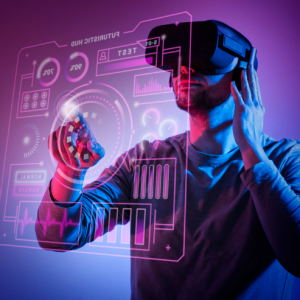
Learning mathematics through gaming can be a dynamic and engaging experience that cultivates problem-solving skills and mathematical thinking in a fun environment. Whether it’s calculating trajectories in physics-based puzzles, managing resources in strategy games, or solving puzzles that require logical thinking, gaming often necessitates mathematical reasoning. Games can also offer immediate feedback, allowing players to learn from their mistakes and refine their strategies, promoting a deeper understanding of mathematical concepts. Additionally, multiplayer games encourage collaboration and competition, fostering discussions about mathematical strategies and concepts among players.
Through gaming, individuals can develop mathematical fluency while enjoying immersive experiences, making math more accessible and enjoyable for learners of all ages. The social aspect of gaming can enhance the learning experience by fostering collaboration and peer-to-peer teaching. Multiplayer math games encourage players to work together to solve problems, discuss strategies, and share insights, creating a supportive learning community. This collaborative environment not only strengthens mathematical understanding but also cultivates essential communication and teamwork skills. Players can choose games that align with their specific mathematical goals and preferences, whether it’s practicing basic arithmetic, mastering algebraic concepts.
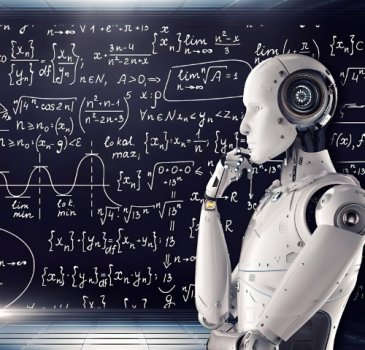

In addition to traditional video games, educational math games specifically designed to teach mathematical concepts are increasingly popular. These games often incorporate gamification elements such as rewards, levels, and achievements to keep players motivated and engaged as they progress through various mathematical challenges. The social aspect of gaming can enhance the learning experience by fostering collaboration and peer-to-peer teaching. Multiplayer math games encourage players to work together to solve problems, discuss strategies, and share insights, creating a supportive learning community.
Moreover, with the rise of virtual reality (VR) and augmented reality (AR) technology, there are immersive math experiences that allow players to visualize abstract concepts in a tangible way, making learning more intuitive and interactive. For example, VR math games can transport players into mathematical worlds where they can manipulate shapes, explore geometric principles, and experiment with mathematical formulas in a hands-on manner. Similarly, AR math apps can overlay mathematical problems onto the real world, turning everyday surroundings into learning opportunities. By leveraging the power of gaming technology, learners can develop a deeper appreciation for math while honing their skills in a dynamic and engaging way, ultimately paving the way for a more mathematically literate society.